Blake Becker · 19 October 2026
Peer Networks Empower Polish Teachers to Navigate Chemistry Lab Safety Concerns Without Major Funding Increases
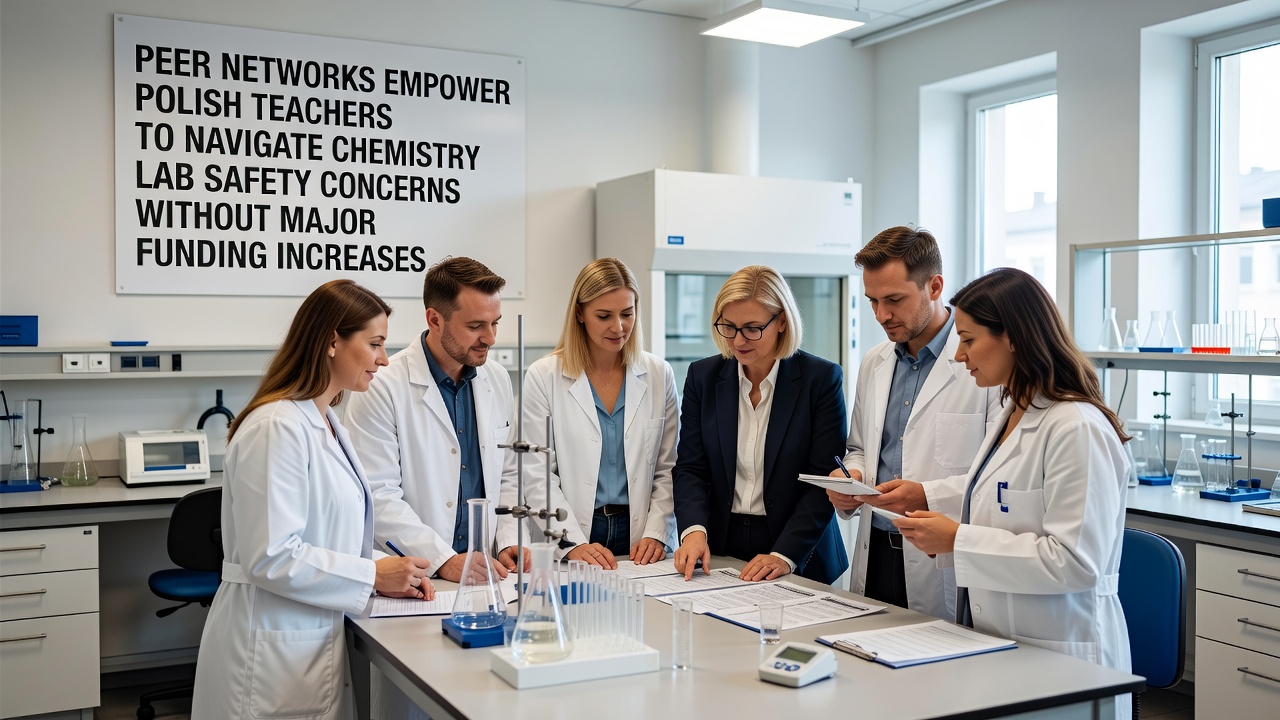
Polish secondary schools continue to face persistent challenges with chemistry laboratory safety, yet educators across the country have turned to structured peer networks as a primary means of addressing hazards and compliance issues, and these collaborations operate without reliance on substantial new government allocations for equipment or facilities. Data from the Polish Ministry of Education and Science indicates that over 65 percent of chemistry classrooms operate with infrastructure dating back at least fifteen years, which creates ongoing concerns around ventilation, chemical storage, and emergency procedures; teachers in these settings report that regular exchanges within regional and national networks allow them to adapt existing protocols and distribute updated safety checklists developed through collective experience rather than external procurement.
Establishing Peer Networks Across Regions
Teachers in provinces such as Małopolska, Śląsk, and Mazowieckie began forming formal peer groups in 2023, and these groups expanded steadily through 2025 by using online platforms alongside occasional in-person meetings held at host schools that already possessed functional lab spaces. Participants exchange detailed incident logs, photographs of improvised storage solutions, and translated excerpts from European Union chemical handling directives, which enables schools operating on tight maintenance budgets to implement incremental improvements such as color-coded labeling systems and revised student supervision ratios. Observers note that the absence of major funding increases has actually accelerated participation because educators recognize that knowledge transfer provides immediate practical value where capital investment remains limited.
One documented case involved a network in western Poland that compiled a shared digital repository of risk assessment templates aligned with current occupational safety regulations, and member teachers reported completing mandatory annual safety audits in half the usual time after adopting the collective materials. The repository includes modular lesson plans that incorporate low-cost alternatives to commercial safety equipment, such as using household-grade containers for short-term chemical isolation when certified units are unavailable, and these resources undergo periodic review by volunteer chemistry specialists who hold advanced certifications.
Practical Outcomes in October 2026
By October 2026, several networks had scheduled virtual roundtables timed to coincide with the release of updated national guidelines on hazardous substance management in educational settings, and participants used these sessions to cross-reference local adaptations against the new directives. Attendance records from one platform show that more than 1,200 chemistry educators joined at least one discussion thread focused on spill containment procedures, while parallel threads addressed ventilation monitoring techniques that rely on existing classroom sensors rather than specialized purchases. Figures from the European Agency for Safety and Health at Work reveal that collaborative training models similar to those operating in Poland correlate with measurable reductions in minor laboratory incidents across multiple member states, suggesting that knowledge-sharing mechanisms deliver tangible safety gains even when infrastructure budgets stay flat.
Integration with Existing Institutional Frameworks
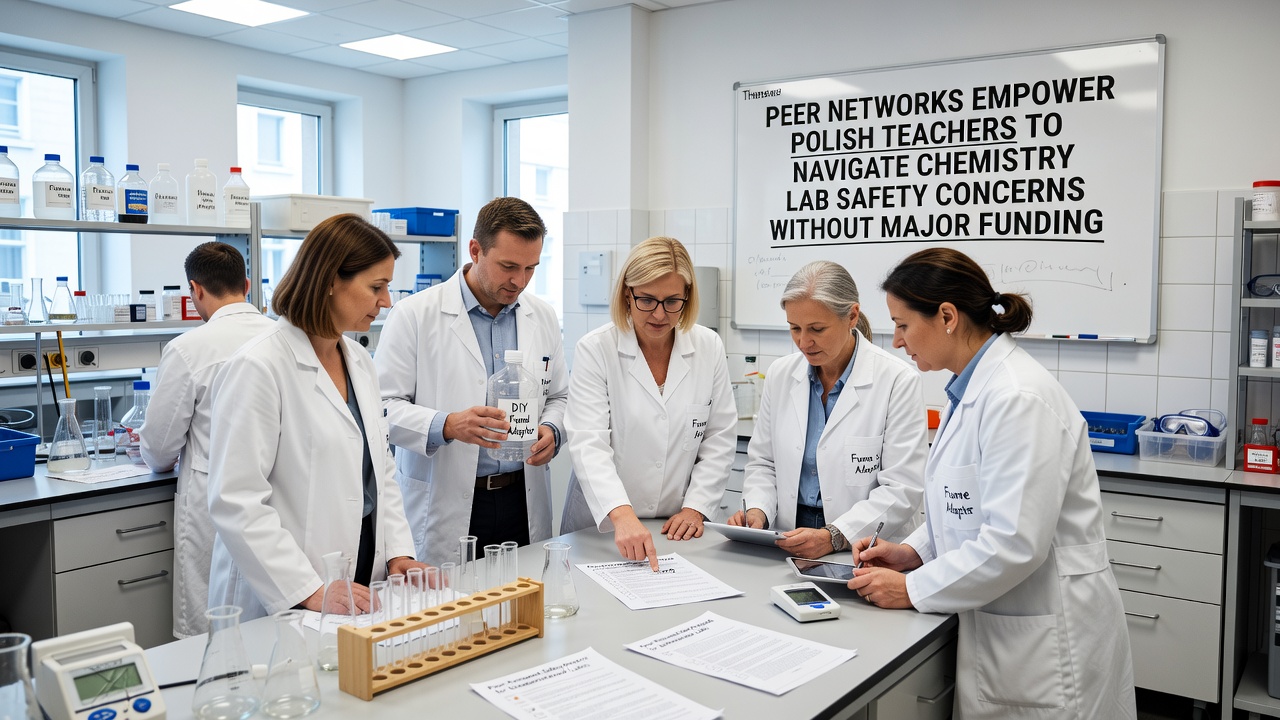
Polish universities have begun offering micro-credentials for teachers who complete peer-network modules on chemical risk management, and these credentials count toward professional development requirements without requiring additional tuition fees because the content draws directly from the networks themselves. Curriculum coordinators at several teacher-training colleges report that they incorporate anonymized case studies submitted by network members into their safety certification courses, which creates a feedback loop where classroom realities inform academic content and vice versa. The approach avoids duplication of effort across districts because standardized templates circulate through a central clearinghouse managed by volunteer administrators rather than paid staff.
Researchers at institutions tracking educational resource allocation have documented that schools participating in these networks maintain compliance rates comparable to those receiving targeted infrastructure grants, although the mechanisms differ sharply; network-supported schools achieve parity through procedural refinements and mutual accountability rather than hardware upgrades. Ministry statistics released in mid-2026 show that reported laboratory-related injuries declined by 12 percent in regions with active peer groups, while regions without comparable structures recorded only a 3 percent drop over the same period.
Scaling and Sustainability Considerations
Expansion plans for 2027 focus on linking existing regional clusters into a national registry that would allow teachers in smaller towns to access expertise from urban centers without travel expenses, and organizers emphasize that the registry will operate through existing school email systems to keep administrative overhead minimal. Discussions at the October 2026 roundtables highlighted successful models from neighboring countries where similar networks reduced reliance on external consultants by training internal facilitators who rotate responsibilities among members. Data compiled by the networks themselves indicate that facilitator turnover remains low because participation counts toward required continuing education hours, which removes one common barrier to sustained involvement.
Those tracking long-term trends note that peer networks also facilitate cross-subject collaboration, with biology and physics teachers contributing perspectives on shared lab spaces and joint safety drills, which broadens the impact beyond chemistry departments alone. The resulting protocols address overlapping concerns such as eyewash station maintenance and chemical inventory reconciliation, and these integrated documents circulate among participants as living resources that receive quarterly updates based on field feedback.
Conclusion
Peer networks have emerged as a durable mechanism through which Polish chemistry teachers address laboratory safety requirements while working within existing budgetary constraints, and the model continues to evolve through documented exchanges of procedures, templates, and compliance strategies. Continued growth depends on maintaining voluntary participation structures that align with professional development mandates, and evidence accumulated through 2026 demonstrates that such networks deliver measurable safety improvements across diverse school settings without necessitating large-scale capital investment.