Zoe Sullivan · 16 November 2026
Polish Schools Pivot to Student-Driven Waste Audits to Tackle Chemistry Lab Disposal Challenges in Overlooked Regions
Polish secondary schools have shifted toward student-led waste audits as a direct response to ongoing difficulties with disposing of materials from chemistry laboratories, and this approach targets regions where traditional waste management infrastructure remains limited. Data from the Polish Ministry of Education shows that chemistry labs generate approximately 250 kilograms of hazardous waste per school each academic year, including solvents, acids, and heavy metal compounds, while rural districts in eastern and southeastern Poland report collection rates below 60 percent compared with urban averages above 85 percent.
Researchers at the University of Warsaw documented these disparities in a 2025 study that examined 180 schools across voivodeships with lower population density, and the findings revealed that transportation costs and infrequent pickup schedules often force schools to store waste on site for months. Student-driven audits emerged as one practical method because they require minimal new funding yet produce detailed inventories that help schools negotiate better contracts with licensed disposal firms.
Background on Chemistry Lab Waste Regulations
European Union directives on hazardous waste, implemented through Polish national law since 2018, classify many common lab reagents as dangerous and mandate tracking from generation to final treatment. Schools must maintain manifests for each batch, yet compliance audits conducted by regional inspectorates in 2024 found that 34 percent of facilities in overlooked counties lacked complete records. The regulations also set strict limits on mixing incompatible substances, which creates additional logistical hurdles when collection services visit infrequently.
Those who have reviewed the inspector reports note that smaller schools often rely on general municipal waste streams for non-hazardous items, but even these streams require separation that many staff members have not received formal training to perform. Student participation in audits therefore supplies both labor and fresh perspectives on sorting protocols that align with the legal requirements.
How Student-Led Audits Operate in Practice
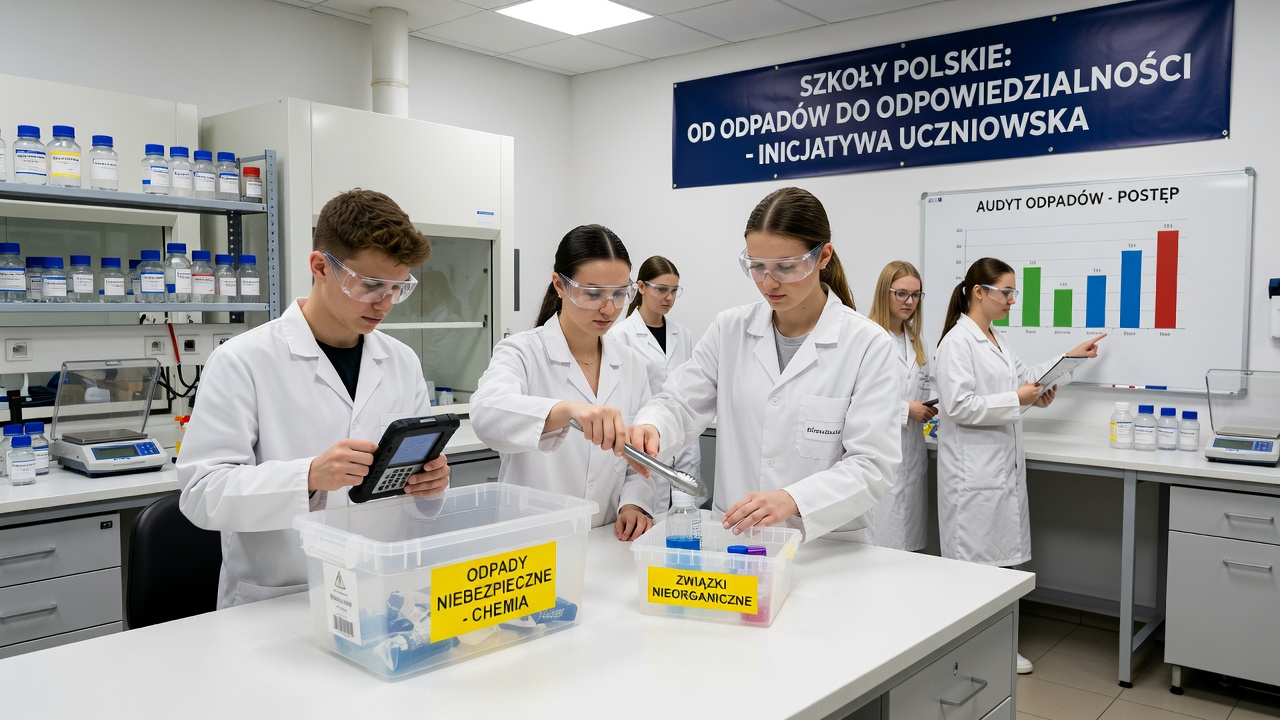
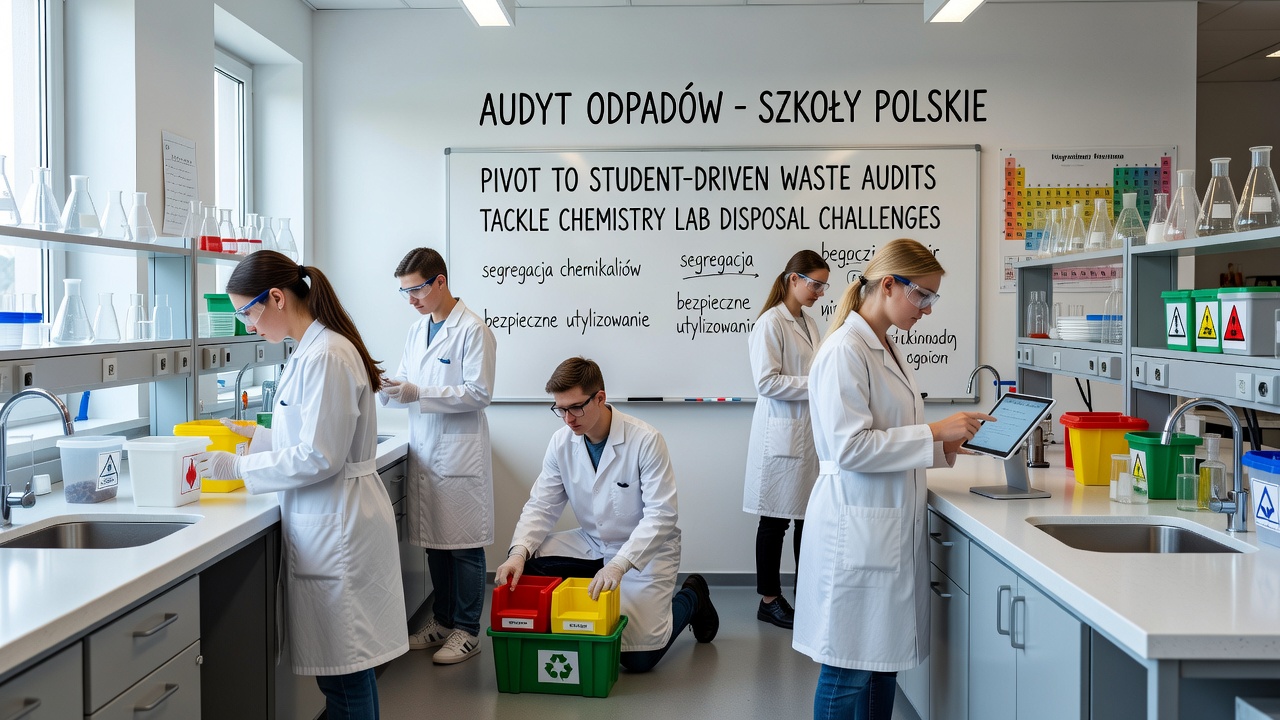
Teams of upper-secondary students receive basic training from certified environmental technicians before they map every chemical container, record quantities, and categorize items by hazard class. They then calculate projected annual volumes and identify opportunities to substitute microscale experiments that reduce waste at the source. In one documented case at a school in the Podkarpackie region, students recommended switching from 500-milliliter reagent bottles to 100-milliliter sizes, which cut solvent purchases by 40 percent within a single semester.
The process continues with follow-up measurements every quarter, and results are compiled into reports that school administrators submit to local environmental agencies. Teachers report that the same students frequently extend their work into neighboring schools, creating informal peer networks that share templates and data comparison tools without requiring additional budget allocations.
Rollout Timeline and Regional Focus
Pilot programs began in three counties during the 2024-2025 school year, and expansion is scheduled to reach an additional 120 schools by November 2026. The Ministry has prioritized districts where geography and population sparsity combine to limit private-sector waste services, including parts of the Świętokrzyskie and Lubelskie voivodeships. Coordinators have distributed standardized audit kits that include digital scales, barcode scanners, and secure data-entry tablets preloaded with templates aligned to EU waste codes.
Figures released by the Central Statistical Office indicate that schools participating in the pilots achieved a 22 percent reduction in stored hazardous materials within six months, largely because audits flagged expired reagents that could be neutralized on site under controlled conditions. These results have encouraged neighboring counties to request similar training sessions for their own students and staff.
Measured Outcomes and Supporting Data
Independent evaluators from the European Environment Agency tracked 45 participating schools through the first full academic cycle and recorded an average 31 percent decrease in the volume of waste sent for off-site treatment. Cost savings averaged 1,800 euros per school annually, primarily from reduced storage fees and lower transportation charges once manifests became more accurate. The same evaluation found that student involvement correlated with higher compliance scores during subsequent inspector visits.
Academic partners at the Jagiellonian University have begun analyzing anonymized audit datasets to identify patterns in chemical usage across different curriculum tracks, and early findings suggest that project-based learning modules generate 15 percent less waste than traditional verification experiments. These patterns are now being incorporated into updated national curriculum guidelines scheduled for release in late 2026.
Conclusion
Student-driven waste audits have supplied Polish schools in overlooked regions with a scalable method for addressing chemistry lab disposal challenges while meeting regulatory standards. Continued expansion through November 2026 will test whether the approach maintains effectiveness at larger scale, and ongoing data collection from participating institutions will provide further evidence on long-term waste reduction and cost outcomes.