Blake Becker · 2 November 2026
University Collaborations Expand Experimental Physics Opportunities Across Poland's Remote Regions via Shared Digital Platforms
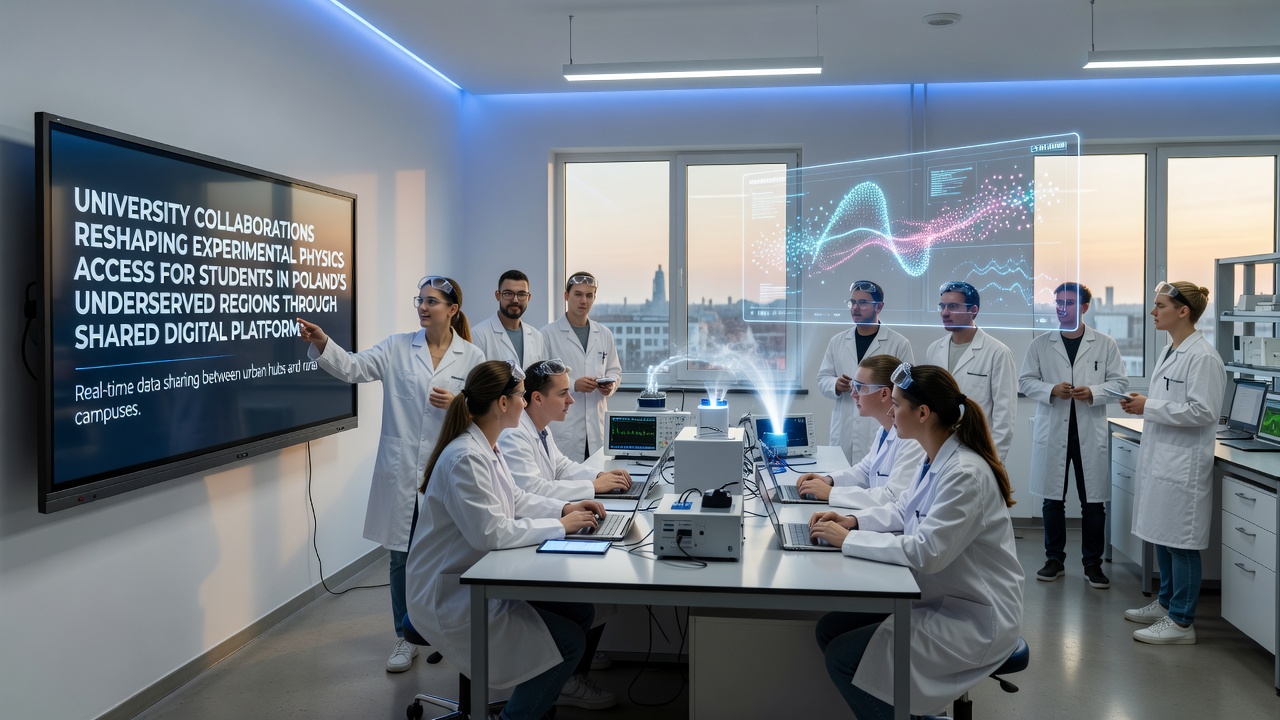
University networks in Poland have developed shared digital platforms that connect students in underserved regions to experimental physics resources previously limited to major urban centers, and these systems allow remote operation of laboratory equipment along with real-time data analysis from partner institutions. Research indicates that institutions such as the University of Warsaw, Jagiellonian University, and AGH University of Science and Technology have established joint protocols for equipment sharing since the early 2020s, while data from the Polish Ministry of Science and Higher Education shows increased participation rates among secondary and early undergraduate students in eastern and northern voivodeships.
Regional Access Gaps and Platform Development
Underserved areas including parts of Podlaskie and Warmińsko-Mazurskie provinces historically faced limited laboratory infrastructure, yet collaborations have addressed this through cloud-based interfaces that stream live feeds from spectrometers, oscilloscopes, and particle detectors housed at central facilities. Observers note that the platforms integrate virtual reality overlays for experiment setup, and figures from 2025 academic reports reveal over 4,200 students gained access in the preceding academic year alone. In November 2026 a new integration phase launched that links additional sensors from the University of Gdańsk, expanding the available experiment catalog by 35 percent according to consortium announcements.
These systems rely on standardized APIs developed through EU-funded projects, and the European Commission digital education framework documents how such tools support cross-institutional data exchange while maintaining safety protocols for high-voltage or laser-based setups. Students log in via school accounts, schedule sessions, and receive recorded results for offline review, which reduces travel costs that previously restricted participation.
Technical Features and Student Engagement
Platform architecture combines live instrumentation control with simulation modules that mirror physical conditions, and researchers at collaborating universities have published interface specifications that allow third-party schools to connect without proprietary hardware. Studies conducted by the OECD on digital higher-education access show measurable gains in conceptual understanding when students manipulate actual equipment rather than relying solely on pre-recorded videos. One documented case involves a class in Suwałki that conducted photoelectric effect measurements using a photomultiplier tube located in Kraków, with data packets transferred in under 200 milliseconds.
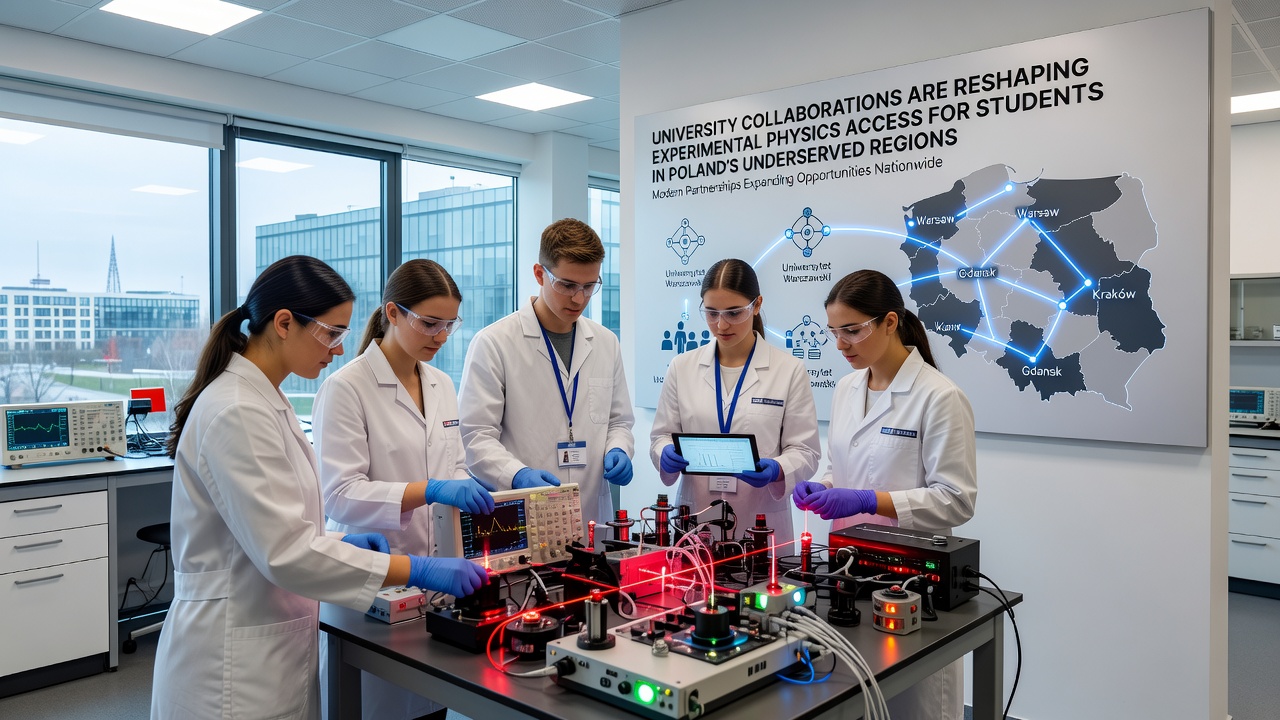
Engagement metrics collected by the consortium indicate average session durations of 47 minutes per student, and qualitative feedback from teachers highlights improved problem-solving when groups troubleshoot connection issues or interpret noisy datasets in real time. The platforms also log usage patterns, enabling universities to adjust experiment availability during peak exam periods.
Partnership Models and Funding Structures
Funding flows through national research grants supplemented by European structural funds, adn agreements specify equipment maintenance responsibilities among the lead institutions. Data released by the National Centre for Research and Development in Poland shows that 18 regional secondary schools joined the network in 2025, bringing the total to 67 active participants. Partnerships extend beyond physics departments to include computer science teams responsible for cybersecurity and latency optimization, while training workshops for teachers occur quarterly via the same digital channels.
What's notable is the modular design that lets smaller colleges contribute specialized sensors, such as muon detectors from the University of Łódź, and these additions appear in the shared menu within weeks of calibration. The model avoids duplication of expensive apparatus and instead focuses on equitable scheduling algorithms that prioritize schools with fewer local resources.
Measured Outcomes and Ongoing Expansion
Academic performance data collected across participating cohorts indicate higher scores on standardized physics assessments compared with non-participating peers in similar regions, and longitudinal tracking by university evaluation units continues through 2027. In addition to core experiments, the platforms now host joint webinars where researchers explain recent publications, and student teams from different voivodeships collaborate on analysis projects that feed into national science competitions.
Expansion plans announced for 2027 include mobile kits that schools can borrow to supplement remote sessions with local demonstrations, and preliminary trials suggest these kits further increase retention when paired with the digital interfaces. The approach continues to draw interest from neighboring countries examining similar resource-sharing frameworks.
Conclusion
University collaborations through shared digital platforms have established measurable pathways for experimental physics participation in Poland's underserved regions, supported by documented increases in access, structured funding mechanisms, and technical integrations that connect remote classrooms to central laboratories. Ongoing developments scheduled through November 2026 and beyond maintain this trajectory while incorporating additional institutions and experiment types.